Free · 30 lessons · ages 9–16

Drones for kids — how drones fly, how to control them and how to make a drone (ages 9–16)

Free drones for kids course in 30 short animated lessons — what a drone is, how a quadcopter flies (lift, thrust and motor speeds), the controls (throttle, yaw, pitch and roll), batteries and flight time, sensors, how to make a drone step by step with an adult, a safe paper rotor and balloon blimp you can make at home, GPS missions, mapping and India’s drone safety rules. Every lesson has a clear rule, a worked example, “Show me how” help, a 20-question test, a badge and printable worksheets.

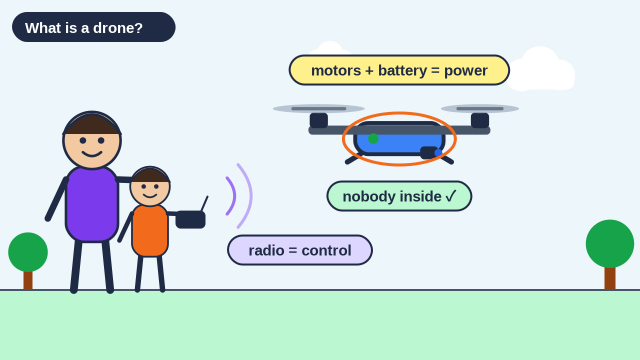
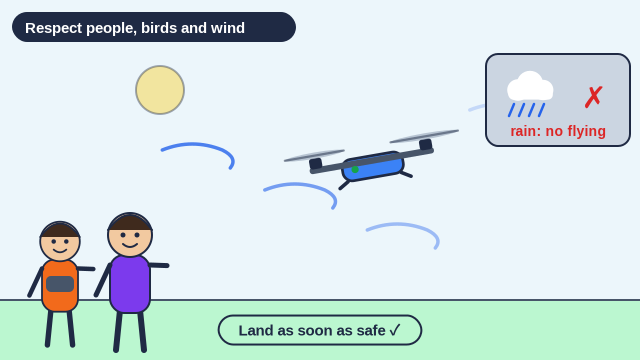
A blue drone with a camera flying over a green field while a child waves at it.

🚁 Quick check: What is a drone?

Drone SimulatorFly a drone with the sticks, pass the rings and plan missions — free, no drone needed. Fly ▶

How this course works

  1. 1. Learn the ideaRead the short lesson and the rule.
  2. 2. Watch it workAn animated example, step by step.
  3. 3. PractiseFresh questions — “Show me how” if stuck.
  4. 4. Take the test20 questions — 16 right to pass.
  5. 5. Earn a badgeOne badge for every lesson.
  6. 6. Get a certificateFinish a part, get its certificate.

The 30 lessons

Each lesson has the idea, a worked example, unlimited practice with “Show me how”, a 20-question test and worksheets. Pass a lesson’s test to earn its badge; pass every lesson in a part to earn that part’s certificate (sign in to keep badges, certificates and progress).

Part 1 · What drones are

Ages 9–12 — what a drone is, drone jobs, drone types, the four forces, propellers and lift, the parts of a drone, India’s drone safety rules, and a Part 1 test.

  1. What is a drone? — picture from the animated lesson Lesson 1 What is a drone? 🚁 Is a crop-spraying drone a drone? → a drone
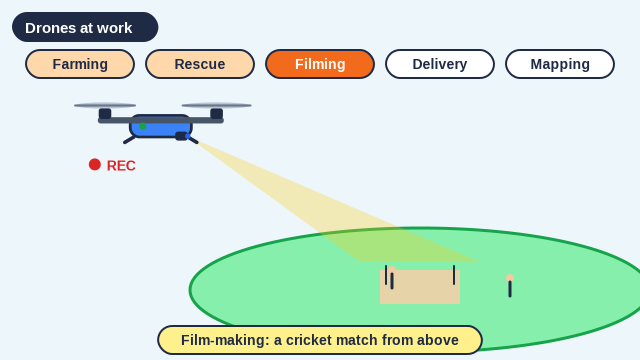
  2. What drones do: uses of drones — picture from the animated lesson Lesson 2 What drones do: uses of drones 🌍 What kind of drone job is it to check plant health? → farming
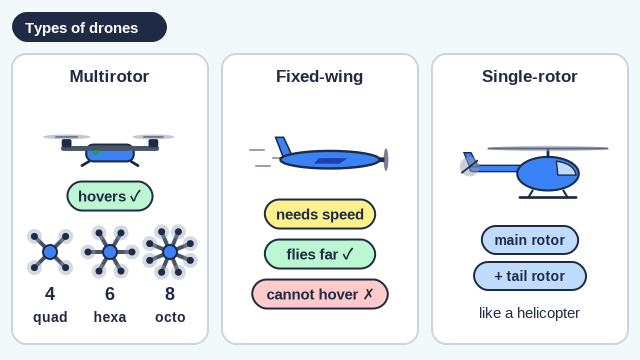
  3. Types of drones — picture from the animated lesson Lesson 3 Types of drones ✈️ How many rotors does a hexacopter have? → 6
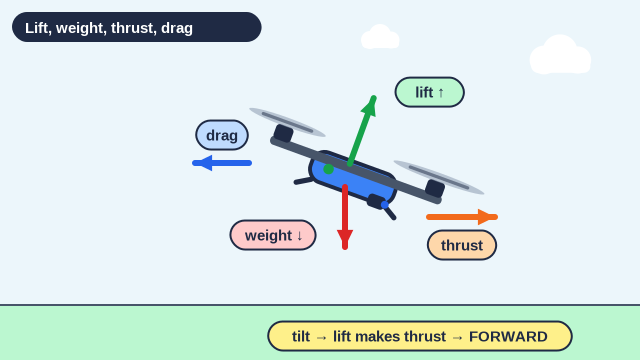
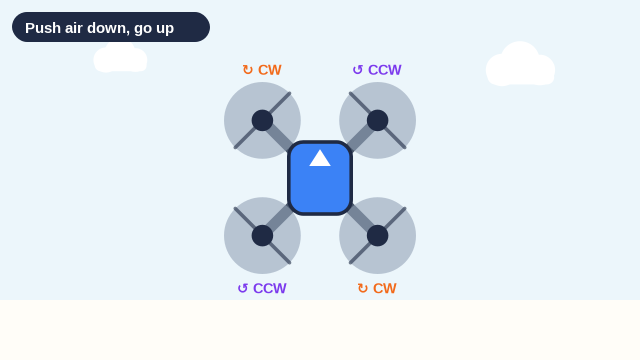
  4. How does a drone fly? — picture from the animated lesson Lesson 4 How does a drone fly? 🌬️ Which force is this: “the props’ upward push”? → lift
  5. Propellers and lift — picture from the animated lesson Lesson 5 Propellers and lift 🌀 Why do drones use propellers that spin in opposite directions? → s…
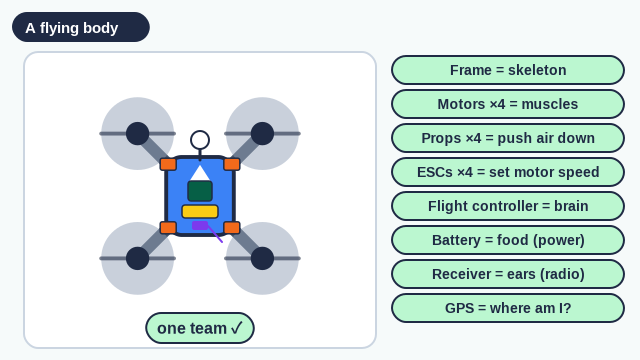
  6. Parts of a drone — picture from the animated lesson Lesson 6 Parts of a drone 🧩 Which part of a drone does this job: “decides the flight time”? → …
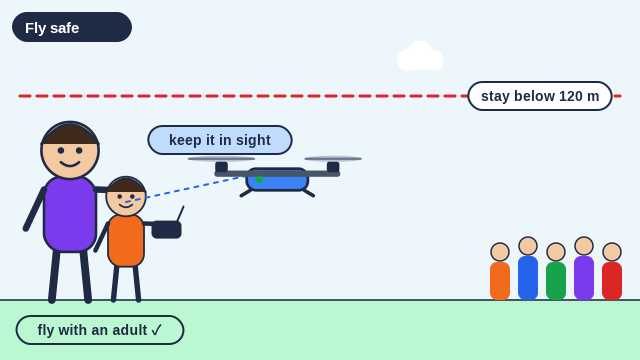
  7. Drone safety and rules in India — picture from the animated lesson Lesson 7 Drone safety and rules in India 📋 In a green zone, how high may a small drone fly? → up to 120 metres
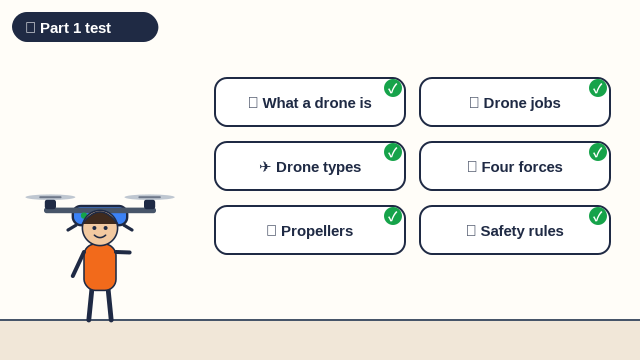
  8. Part 1 test: what drones are — picture from the animated lesson Lesson 8 Part 1 test: what drones are 🚁 Is a passenger aeroplane a drone? → not a drone

Part 2 · How drones fly and move

Ages 10–14 — the controls, steering with motor speeds, thrust-to-weight, batteries and flight time, cells and voltage, motor KV and props, sensors, and a Part 2 test.

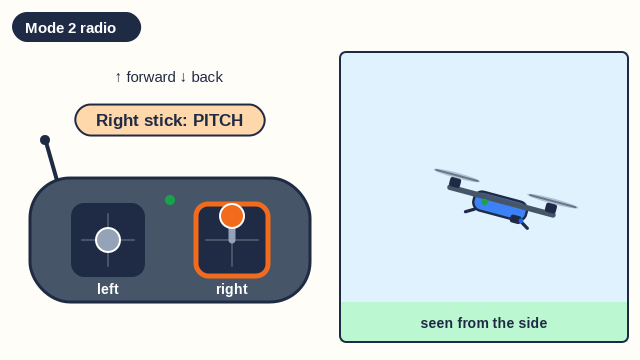
  1. Controls: throttle, yaw, pitch, roll — picture from the animated lesson Lesson 9 Controls: throttle, yaw, pitch, roll 🎮 On a mode 2 radio you push the left stick up. What does the drone …
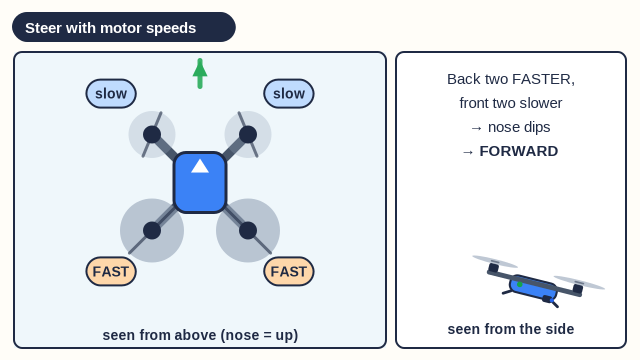
  2. How motor speeds steer a drone — picture from the animated lesson Lesson 10 How motor speeds steer a drone ⚙️ A quadcopter wants to fly forward. Which motors slow down? → the t…
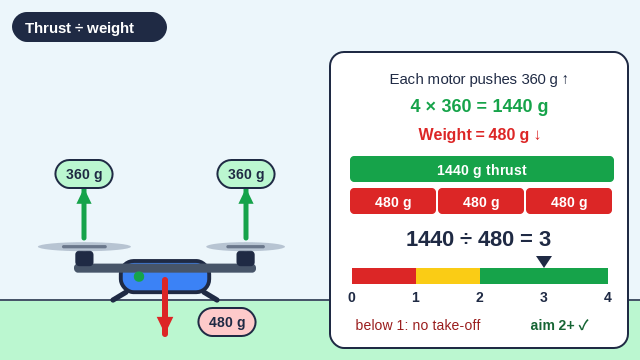
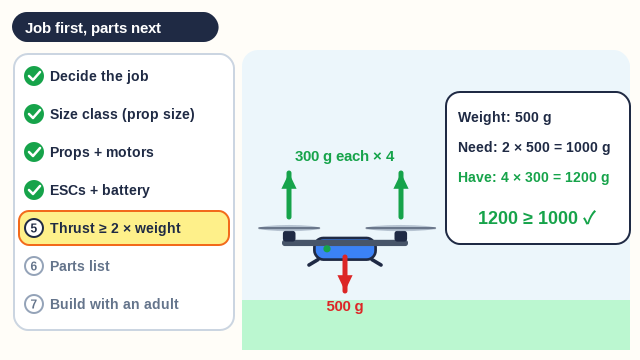
  3. Thrust and weight — picture from the animated lesson Lesson 11 Thrust and weight 💪 A drone weighs 480 g. Its 4 motors push up 360 g each. What is its…
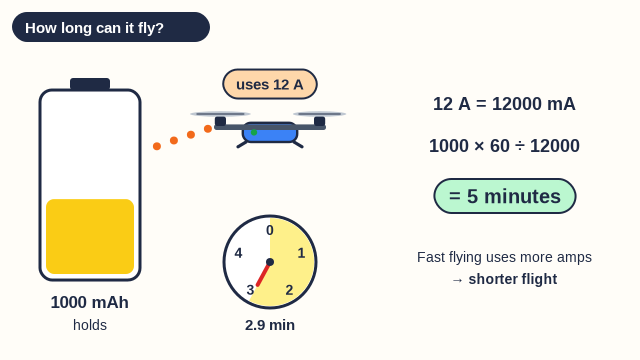
  4. Batteries and flight time — picture from the animated lesson Lesson 12 Batteries and flight time 🔋 A drone battery holds 1000 mAh. In flight the drone uses 12 amps o…
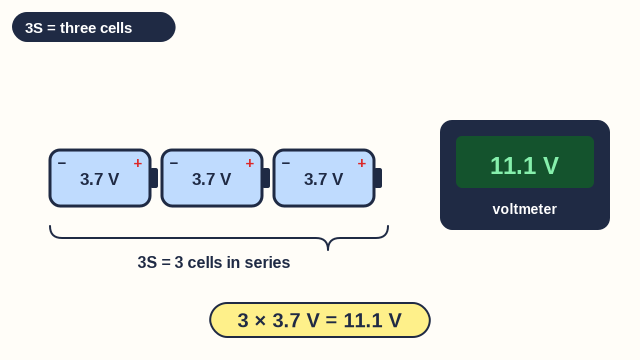
  5. Cells and voltage — picture from the animated lesson Lesson 13 Cells and voltage ⚡ A 3S LiPo battery has 3 cells in series, each 3.7 V. What is its n…
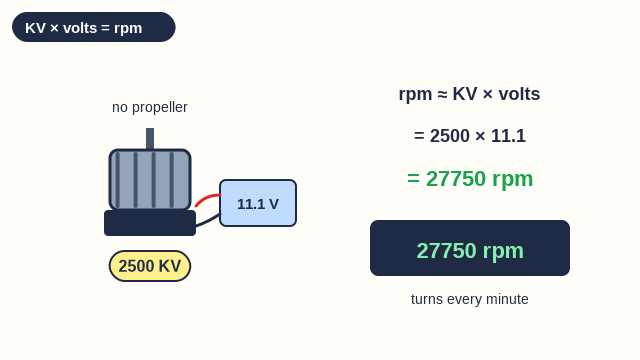
  6. Motors, KV and propellers — picture from the animated lesson Lesson 14 Motors, KV and propellers 🌀 A 2500 KV motor runs on an 11.1 V battery. About how many rpm does…
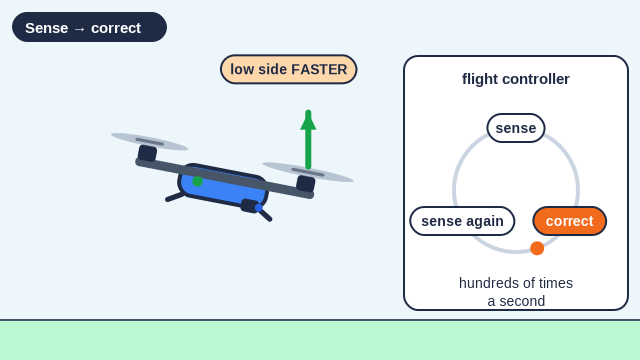
  7. Sensors that keep a drone steady — picture from the animated lesson Lesson 15 Sensors that keep a drone steady 🧭 Which sensor lets a drone fly back to where it took off? → GPS
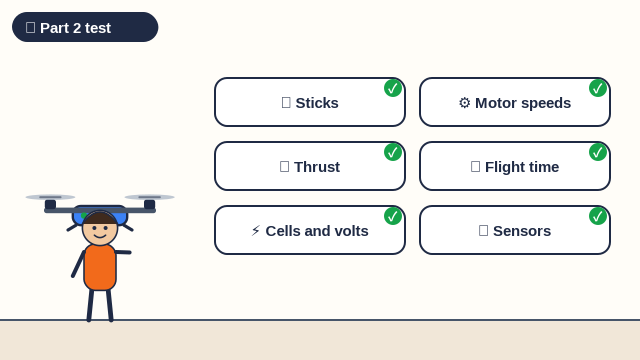
  8. Part 2 test: how drones fly and move — picture from the animated lesson Lesson 16 Part 2 test: how drones fly and move 💪 What does a thrust-to-weight ratio of 2 mean? → thrust is twice we…

Part 3 · Build a drone

Ages 11–16 — plan a build, motors and ESCs, flight controller and radio, FPV camera, how to make a drone step by step, the pre-flight checklist, a paper rotor and blimp at home, and a Part 3 test.

  1. Plan your drone build — picture from the animated lesson Lesson 17 Plan your drone build 📏 Which drone suits this: “flying safely indoors”? → a tiny whoop
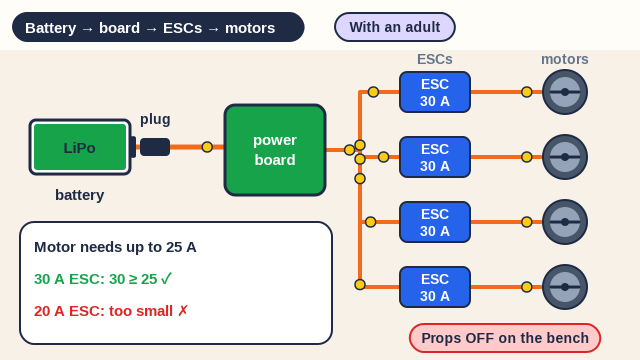
  2. Motors, ESCs and power — picture from the animated lesson Lesson 18 Motors, ESCs and power 🔌 How many ESCs does a quadcopter need? → 4 (or one 4-in-1)
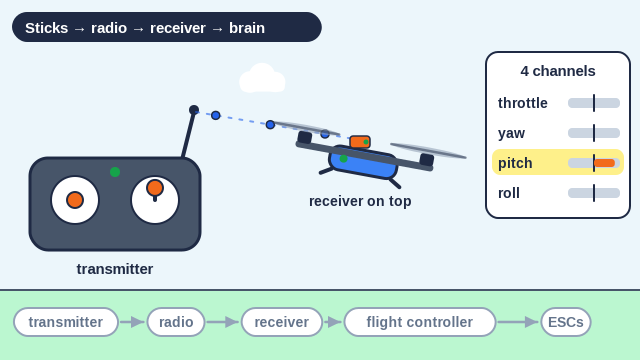
  3. Flight controller and radio — picture from the animated lesson Lesson 19 Flight controller and radio 📡 Linking a receiver to one transmitter is called… → binding
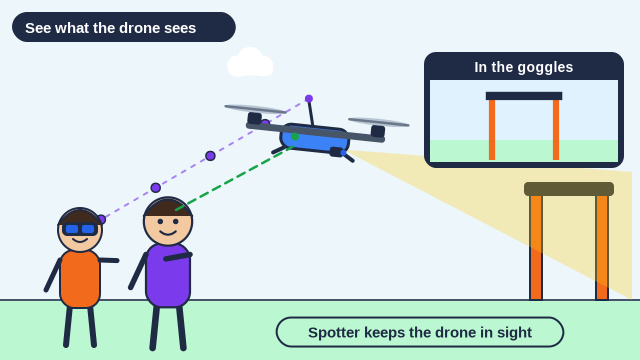
  4. FPV: camera, video and goggles — picture from the animated lesson Lesson 20 FPV: camera, video and goggles 🥽 What does FPV stand for? → first-person view
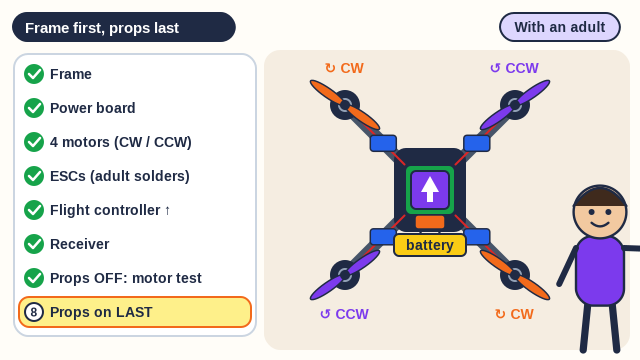
  5. How to make a drone, step by step — picture from the animated lesson Lesson 21 How to make a drone, step by step 🔢 To assemble a quadcopter, which is the FIRST step? → build the fra…
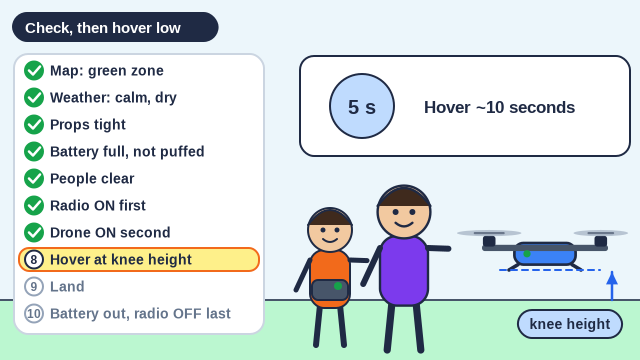
  6. Pre-flight checklist and first hover — picture from the animated lesson Lesson 22 Pre-flight checklist and first hover ✅ Which is switched on FIRST: the radio or the drone? → the radio
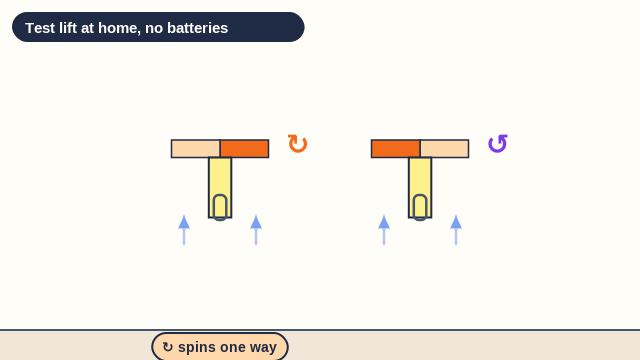
  7. Make a paper rotor and a balloon blimp — picture from the animated lesson Lesson 23 Make a paper rotor and a balloon blimp 🪁 Paper rotor, balloon blimp or quadcopter: “spins as it falls”? → a…
  8. Part 3 test: build a drone — picture from the animated lesson Lesson 24 Part 3 test: build a drone 🔢 To plan a drone build, which is the FIRST step? → decide what it i…

Part 4 · Fly smart, program and use drones

Ages 11–16 — GPS waypoints, mapping and farm drones, drone programming, drones for good and careers, privacy and weather, and the final test.

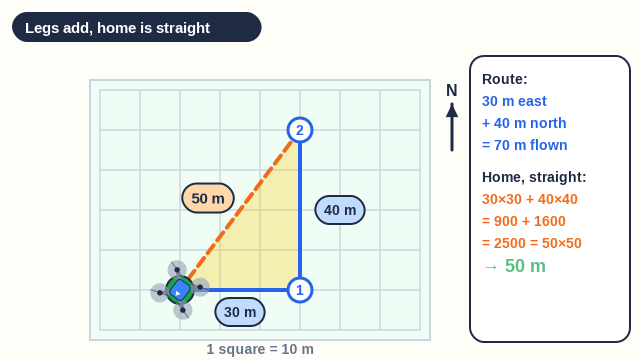
  1. GPS waypoints and missions — picture from the animated lesson Lesson 25 GPS waypoints and missions 🗺️ A drone flies 30 m east and then 40 m north. “Return to home” flie…
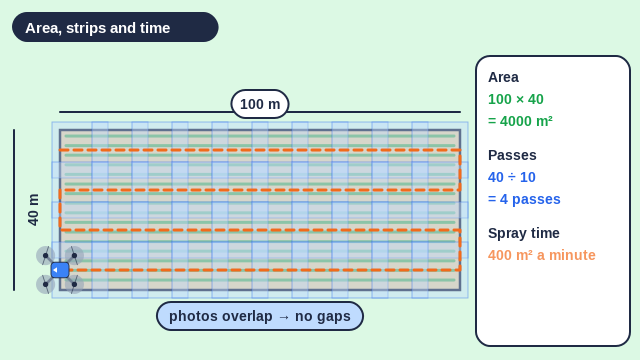
  2. Mapping and farm drones — picture from the animated lesson Lesson 26 Mapping and farm drones 🌾 A drone maps a rectangular field 100 m long and 40 m wide. What is…
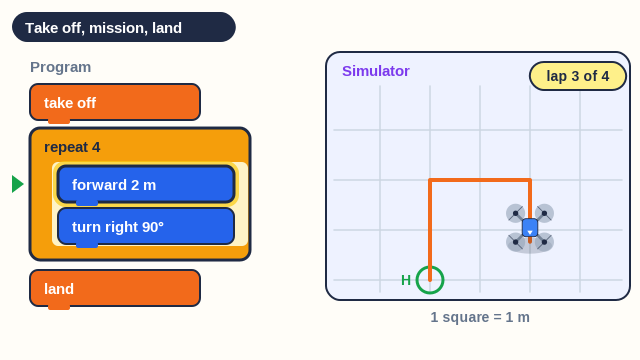
  3. Program a drone — picture from the animated lesson Lesson 27 Program a drone 💻 A repeat block “repeat 4 { forward 2 m; turn right 90° }” flies a……
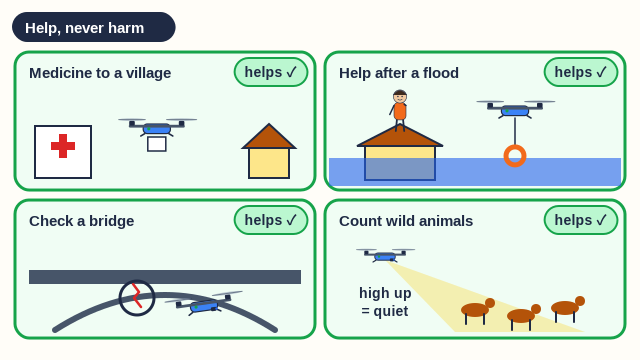
  4. Drones for good and drone careers — picture from the animated lesson Lesson 28 Drones for good and drone careers 💚 Which drone job helps wildlife? → counting animals
  5. Privacy, nature and weather — picture from the animated lesson Lesson 29 Privacy, nature and weather 🛡️ Strong gusty wind arrives during a flight. What should you do? → l…
  6. Final drone test — picture from the animated lesson Lesson 30 Final drone test 🔋 Flying fast and climbing a lot makes flight time… → shorter

What do children learn about drones?

A drone is an aircraft with no pilot on board — powered, and controlled by a radio or by a program. In Part 1 children learn what makes something a drone, how drones help farmers, rescuers, film-makers and map-makers, the main drone types (multirotor, fixed-wing, single-rotor), the four forces of flight, why propellers come in clockwise and anticlockwise pairs, the parts of a quadcopter and how to fly safely and legally in India. In Part 2 they learn the controls (throttle, yaw, pitch and roll), how a drone steers only by changing motor speeds, thrust-to-weight ratio, battery capacity and flight time, LiPo cells and voltage, motor KV and propeller size, and the sensors that keep a drone level. In Part 3 they plan and build a quadcopter with an adult — frame size, motors, ESCs, power board, flight controller, radio and FPV camera, the build order, the pre-flight checklist and a first low hover — and make a safe paper rotor and balloon blimp at home. In Part 4 they plan GPS waypoint missions, work out mapping and spraying sums, write simple drone programs and learn how drones do good — and how to respect privacy, nature and the weather.

Free drones worksheets (PDF)

40 questions per sheet with an answer key — print, save as PDF or solve online.

Drones classes — live online, request a call back

Prefer a real teacher? TalentJR teachers take live online classes anywhere in India. Tell us what you need and our team will call you with timings and fees.

Live online classesSmall groups or 1:1 with a teacher, from home, any city.
We call you backOur team asks what your child needs, then shares timings and fees.
Home tutor?We are still building our list of home tutors — ask on the call if there is one near you.
How would you like classes?
My learning Progress in every course, time spent, badges, certificates and where to continue. Robotics for Kids Robots, sensors and robot programs — plus DIY robots. Drone Simulator Fly with the sticks, pass the rings and plan missions.

Drones for Kids questions

What is a drone course for kids?

A drone course for kids teaches what drones are and how they fly — lift and the four forces, propellers, the parts of a quadcopter, the controls, batteries and sensors — then how to plan and build a drone with an adult, fly safely and program simple missions. This free TalentJR course has 30 animated lessons with tests, badges and worksheets.

How can kids make a drone at home?

Start safely with no batteries: lesson 23 shows how to make a paper rotor and a balloon blimp that teach lift. To build a real flying drone, use a beginner micro quadcopter kit (nano class, 250 g or less) and follow lesson 21 step by step — frame first, props last — always with an adult, who handles the soldering and the LiPo battery.

Drone kaise banaye? (Hindi)

पहले पेपर रोटर और गुब्बारे वाला ब्लिम्प बनाकर लिफ्ट को समझें (पाठ 23)। असली ड्रोन के लिए 250 ग्राम से हल्की शुरुआती किट लें और बड़े की मदद से पाठ 21 के कदम अपनाएँ — पहले फ्रेम, आख़िर में प्रोपेलर।

What age is this drone course for?

Ages 9 to 16. Part 1 (what drones are) suits ages 9–12, Part 2 (how drones fly) ages 10–14, and Parts 3 and 4 (building, missions and programming) ages 11–16. Building and flying a real drone is always done with an adult.

Do I need to buy a drone?

No. Every lesson, test, worksheet and the drone simulator work without a drone. The home activities in lesson 23 need only paper and a balloon. A beginner kit is a nice next step for lesson 21, with an adult.

Can children fly drones in India?

Children should fly only with an adult in charge. India’s drone rules group drones by weight (nano = 250 g or less) and by airspace zones: green zones allow flying up to 120 m, yellow zones need permission and red zones are closed. Keep the drone in sight and away from airports and crowds, and ask an adult to check the latest rules before flying somewhere new.

Is this drone course free?

Yes. All 30 lessons, animations, practice, tests, worksheets, badges, certificates and the drone simulator are free. Classes with a TalentJR teacher (live online) are paid — request a call back for fees.

Where can kids practise flying a drone online?

Use the free TalentJR Drone Simulator (talentjr.in/drones-for-kids/drone-simulator): practise throttle, yaw, pitch and roll, fly through rings and plan missions — no drone needed. For coding robots, try Block Coding for Kids (talentjr.in/block-coding-for-kids) and Robotics for Kids (talentjr.in/robotics-for-kids).

Are there drone classes for kids near me?

TalentJR teachers take live online classes anywhere in India. Use the call-back form (“Classes near you”) on this page and our team will call you.